As we move from sandals into trainers and boots, some people notice that their feet start to hurt more. Sometimes the problem isn't simply the shoe. It can be the way the foot is functioning inside it.
We're thrilled to offer this cutting-edge service to our patients. Foot, knee, hip and back pain is commonly a result of poor biomechanics, often stemming from the feet, and if left untreated, these problems can lead to further injury and discomfort. That's why we've invested in the latest Footscan technology, a system used in more than 3,000 scientific studies and trusted by state-of-the-art movement labs and elite sports teams worldwide, from Team GB to Manchester City FC.
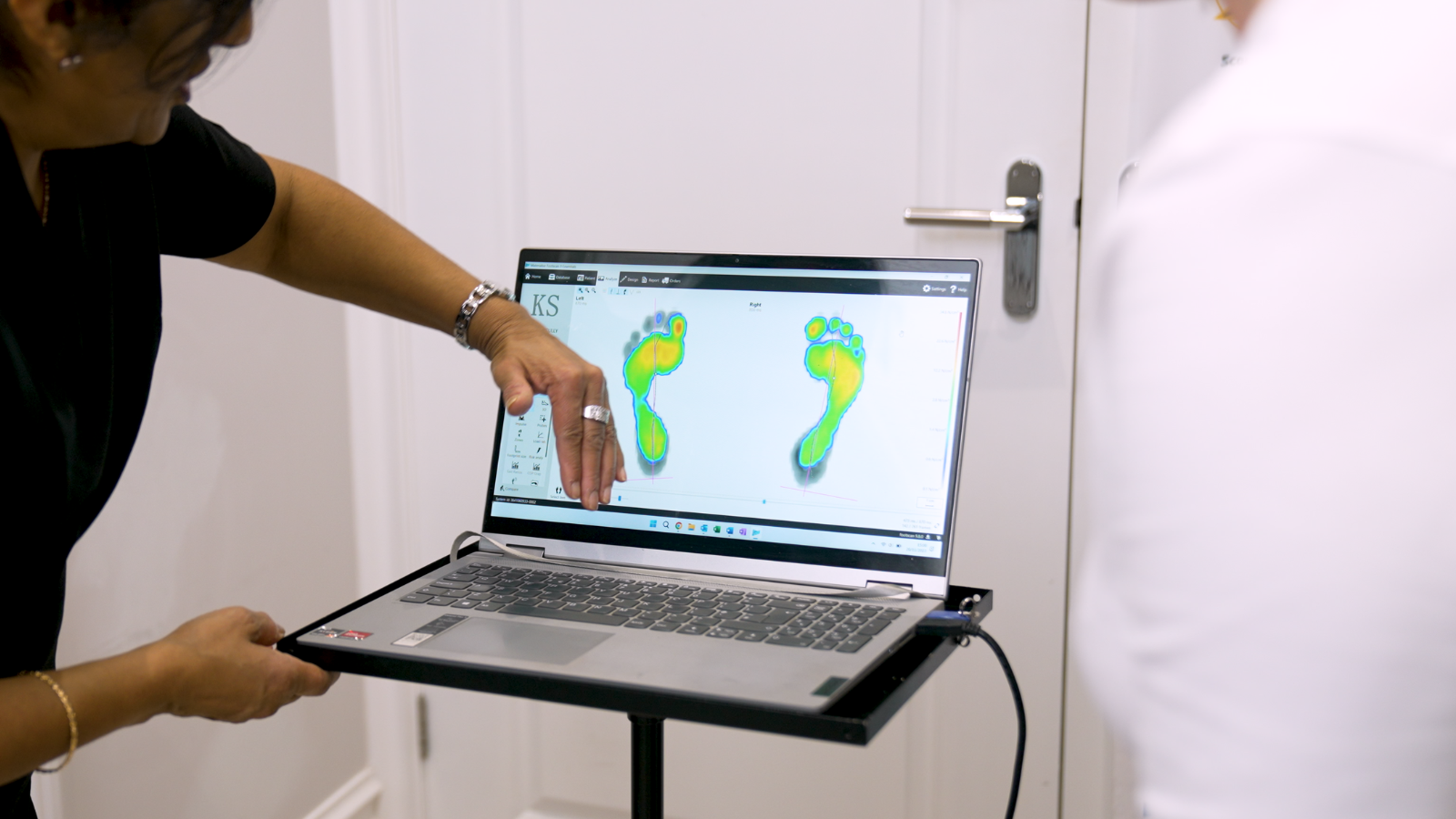
How does it work?
Step 1: Measurement
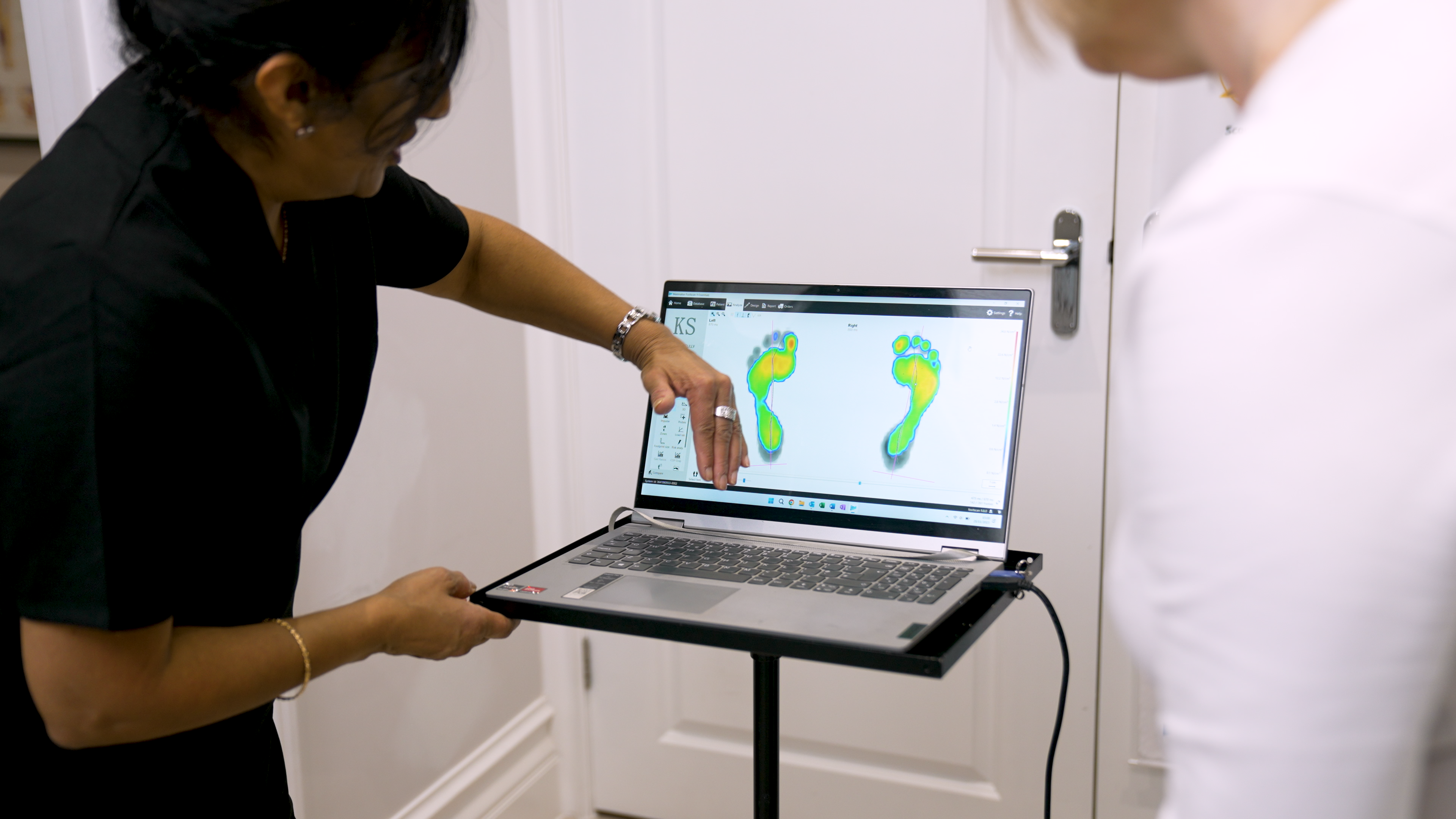
We take you through a detailed Footscan assessment to analyse your standing posture, balance and gait, capturing multiple left and right foot strikes as you walk.
Step 2: Analysis
Our expert clinician observes how your feet function during your natural gait to identify any asymmetries or abnormalities in your foot pressure, timings and stability, then suggests the most suitable treatment pathway for you.
Step 3: Design
Following your analysis, if appropriate, we design you a bespoke pair of Phits orthotics, 3D printed to your exact specifications using the dynamic data from your Footscan assessment.
Step 4: 3D Print
Your orthotics are 3D printed, quality-controlled and personalised by our manufacturing partner, the industry frontrunners in 3D-printed orthotic manufacture.
Step 5: Fitting
After a couple of weeks, you'll return to the clinic to fit your new orthotics, optimising your foot function and comfort with every step.
Why choose our award-winning Phits 3D-printed orthotics?
Data-driven prescriptive design. Traditional orthotics are typically designed using your static foot shape, whereas Phits are the world's first 3D-printed orthotics designed from your dynamic gait analysis using Footscan.
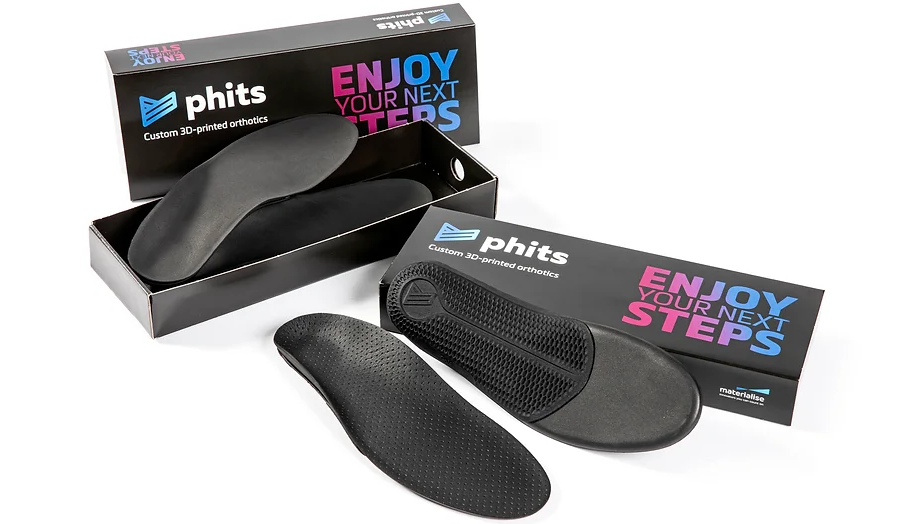
Optimal accuracy. Phits are accurate to the nearest 0.1mm with no room for error in manufacturing, providing tailored support and cushioning exactly where you need it. This also means an exact replica can be produced if you need a second pair.
Minimal bulk and lightweight. Phits are less than half the weight of traditional orthotics, while still offering extreme durability and comfort, whether you're walking, running or playing sport.
Footwear specific. Whatever your age or activity level, Phits offers specific designs for your footwear, including walking, running, football, golf, cycling, skiing and workwear.
Phits for all. Whether you're an elite athlete, a recreational walker or on your feet all day at work, Phits helps your feet adopt the correct foot motion, improves movement efficiency and minimises your risk of injury.
The choice of champions. Phits are the number one orthotic choice of multiple British and World Champion athletes, from world record-breaking legends such as Paula Radcliffe, to current champions such as Charlotte Purdue, keeping them moving pain-free.
Sustainable. As Paula Radcliffe puts it, her Phits simply don't wear out. As well as being robust, they're 3D printed using recycled material, removing the waste associated with traditional orthotic manufacturing.
And as we head into winter, when our feet spend much more time enclosed in footwear, it can be a good time to look at how they are actually functioning. Whether you're aiming for the podium or simply want to walk pain-free, our expert clinicians are here to help people of all ages, in all walks of life.
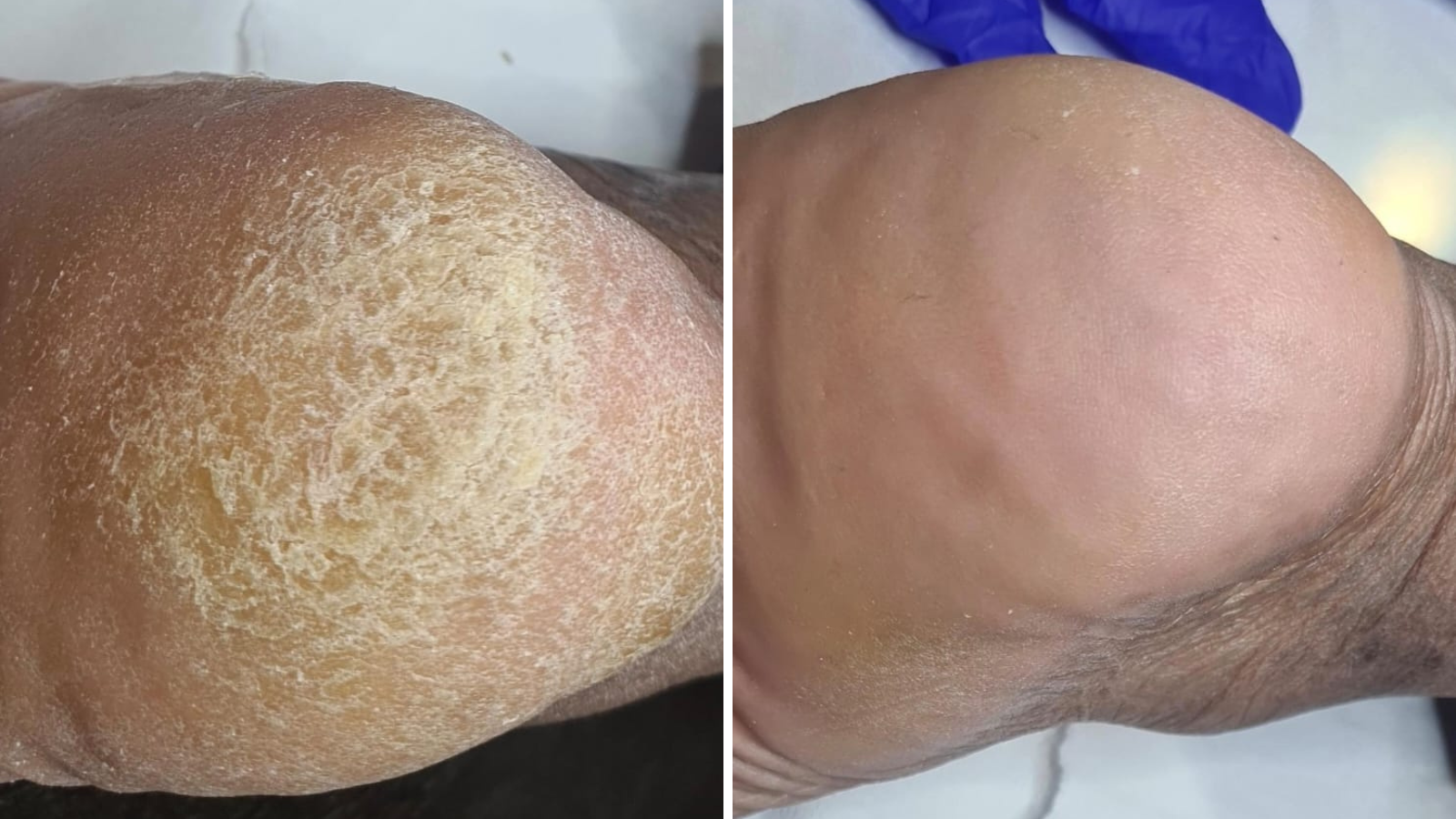
Summer means sandals, holidays and bare feet, but it also means cracked heels become much more common.
What do cracked heels look and feel like?
Cracked heels often start as dry, rough, thickened skin around the edge of the heel. As the skin loses moisture and elasticity, deep cracks (called fissures) can develop. They may feel tight, sore and uncomfortable, and can become very painful to walk on as they split further with every step.
Why do they occur, especially in summer?
- Wearing open-backed sandals leaves the heel unsupported, allowing the skin to spread sideways under pressure.
- Warm weather, dry heat and dehydration reduce the skin's moisture, making it less elastic and more likely to crack.
- Increased walking on holiday, hard floors around pools and going barefoot can all make the problem worse.
Many people are concerned about how cracked heels look cosmetically, but they are much more than a cosmetic issue.
As cracks deepen they can bleed, become extremely painful and provide an entry point for bacteria. This can lead to infection and, in some cases, serious complications such as cellulitis, which is always best prevented rather than treated.
If you have diabetes, don't ignore cracked heels.
People with diabetes are at greater risk because raised blood glucose can affect collagen, making the skin drier and less elastic. Some people also develop reduced sweating due to nerve damage (autonomic neuropathy), resulting in very dry skin. Combined with reduced circulation, slower healing and loss of sensation, even a small crack can become a significant problem.
How can we help?
At Essex Footcare we can:
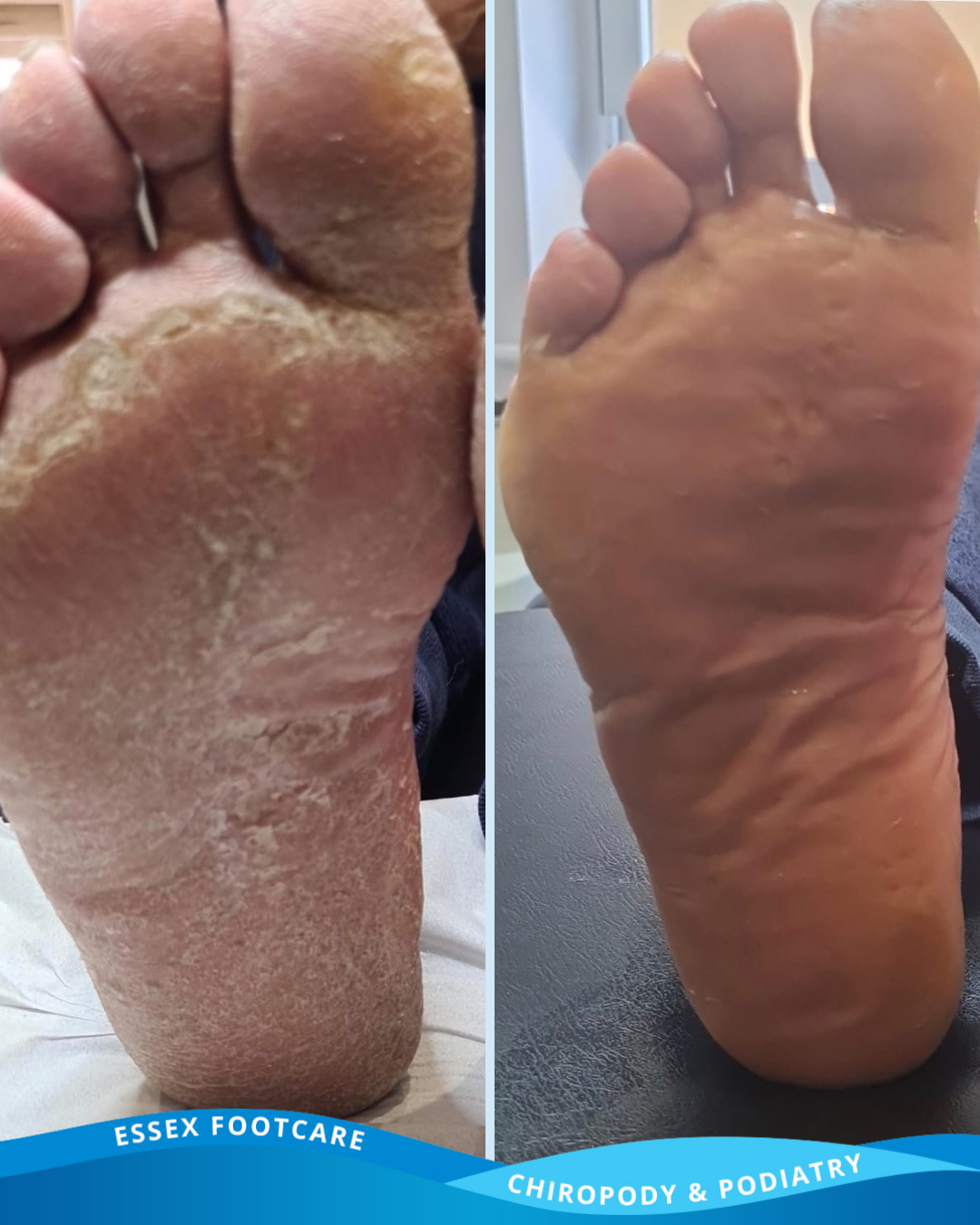
- Safely remove hard skin using sterile podiatry instruments.
- Reduce painful fissures and encourage the skin to heal.
- Recommend the most appropriate emollient or heel balm for your skin type to improve hydration and restore elasticity.
- Assess your footwear and suggest ways to reduce pressure on the heel, including improving shock absorption where appropriate.
What shouldn't you do?
Please avoid DIY treatments using cheese grater-style files, blades, razors or picking and peeling the skin. It's very easy to remove too much tissue, causing bleeding, infection and delayed healing, particularly if you have diabetes or poor circulation.
Healthy heels don't just look better in sandals, they're more comfortable, safer and help keep you active all summer long.
Book an appointment today and step into your holiday with confidence.
Fungal nail infections are a common condition that can affect both toenails and fingernails, often starting as a small change in colour or texture before gradually progressing. The nail may become thickened, discoloured, brittle, or distorted over time, and in some cases can cause discomfort or embarrassment.
These infections are caused by fungi that thrive in warm, moist environments, making feet particularly vulnerable. While they may seem minor at first, fungal nail infections rarely resolve on their own and can become more difficult to treat if left untreated.
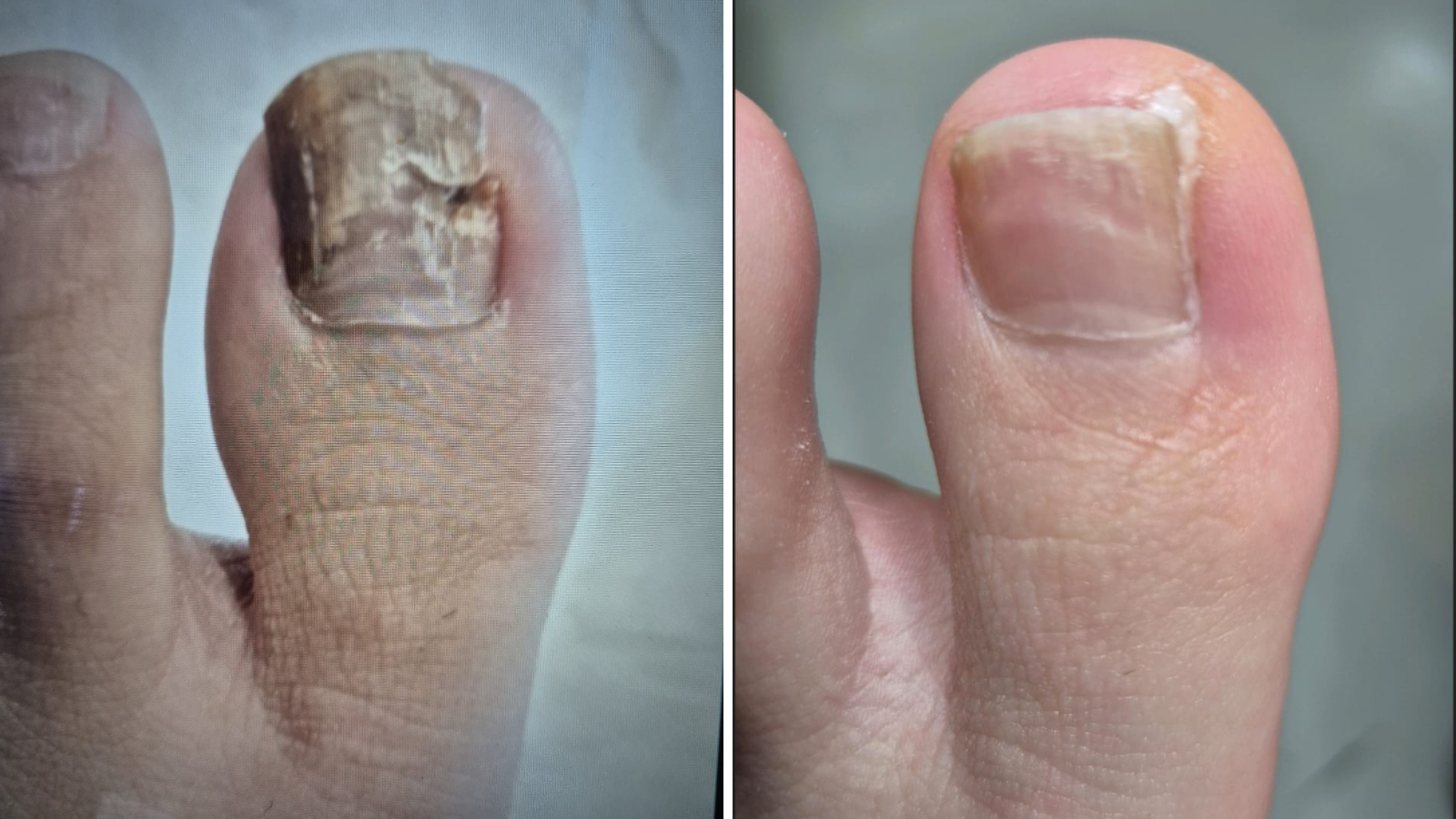
At Essex Footcare, we began with a fungal nail test to confirm the diagnosis. It is important to note that fungal infections often affect not only the nail but also the surrounding skin, so this was assessed and treated at the same time.
Management included:
- Regular podiatry treatment to reduce the thickness, damage, and infection of the nail
- A tailored home care plan designed using clinical experience and podiatric expertise
- Ongoing clinic appointments to carry out nail care and to review and adjust the home management plan, which included specifically selected anti-fungal nail and skin care products.
Although not all nails respond in this way. Fungal nail infections can be persistent, and outcomes vary depending on how long the infection has been present, the severity of nail involvement, underlying health factors, and adherence to the treatment plan.
Doing something early is always better than doing nothing.
The aim is to reduce the risk of progression, discomfort, nail distortion, and secondary bacterial infection affecting the surrounding skin and tissues.
Having a nail that feels better and looks better is important to patients when they come for podiatry, often embarrassed and not knowing what to do, having tried lots of other things at home.
Fungal nail infections are common, but they should not be ignored or left untreated.
If you are concerned about changes in your nails, early assessment allows us help your nails feel and look better.
Book your appointment with us.
📍 Visit us at Essex Footcare, professional assessment makes all the difference.
👉 Book your journey to recovery, call your nearest clinic in Billericay 01277 659200, Basildon 01268 553653, or Romford 01708 728498. Book your appointment today and walk comfortably again.
If you have a painful corn on your foot, you’re not alone. Corns are one of the most common reasons patients seek help from a podiatrist in Essex.
The good news? Corns can usually be treated safely and effectively, often with immediate relief.
The important part? They need to be treated properly.
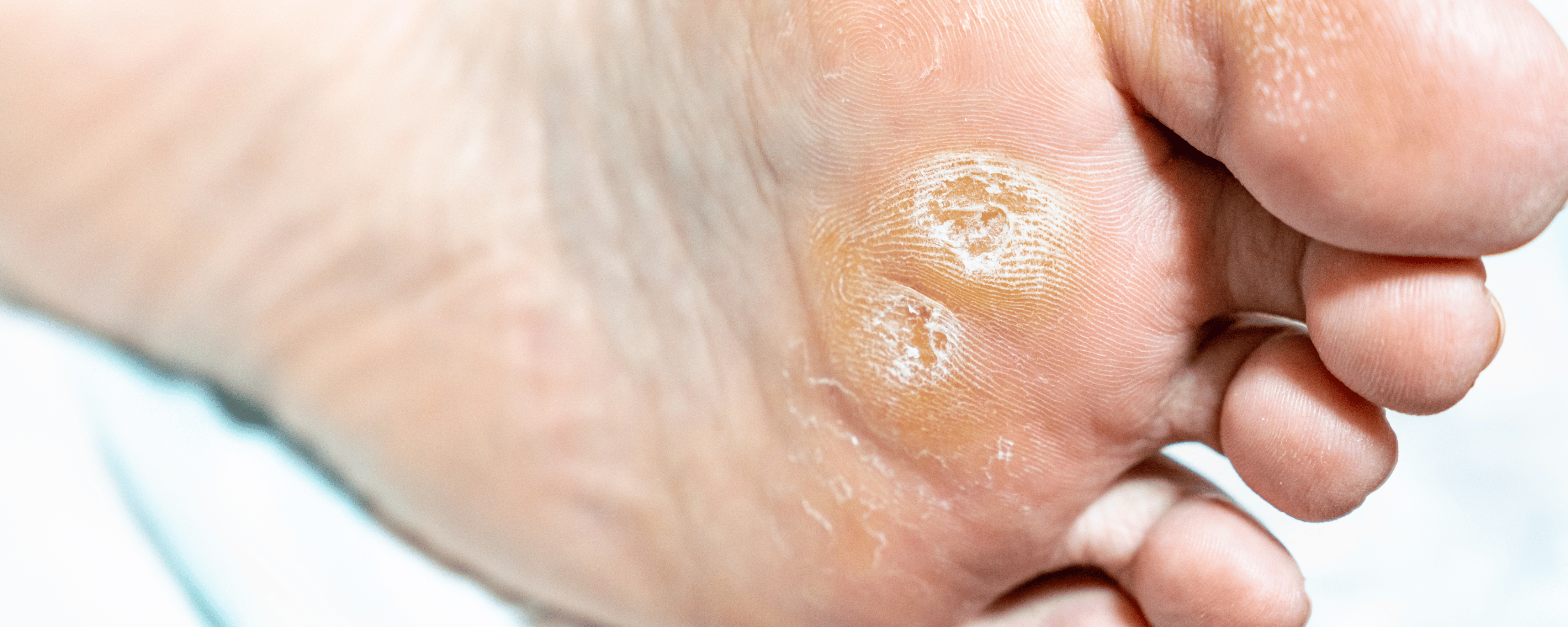
What is a Corn?
A corn is a small, concentrated area of thickened skin that develops due to repeated pressure or friction.
They commonly occur:
- On the tops or sides of toes
- Between toes (soft corns)
- Under the ball of the foot
- Around prominent joints
- Corns are not infections.
- And despite common belief, corns do not have roots. What people describe as a “root” is simply a dense core of hard skin pressing inward due to ongoing pressure.
Why do Corns form?
Corns always develop because of mechanical stress.
Common causes of corns
- Poorly fitting footwear
- Shoes that are too tight
- Shoes that are too loose (causing friction)
- Hard toe boxes (safety boots, ski boots)
- Tight socks or seams from compression stockings
- High pressure under the foot
- Corns frequently form under the ball of the foot due to increased walking pressure.
- Foot structure and biomechanics
- Toe deformities
- Prominent joints
- Changes in foot posture
- Reduced fatty padding under the foot (common with age)
- When cushioning reduces, the skin thickens to protect itself, forming a corn.
Why are Corns so painful?
Corns press inward as well as outward.
That central core pushes into deeper layers of skin when you walk, creating sharp, localised pain, often described as “walking on a pebble.”
The smaller and more concentrated the corn, the more painful it can be.
Is it safe to use Corn plasters or acid treatments?
Over-the-counter and GP-prescribed corn treatments often contain acid. While acid may burn away some of the hard skin, it:
- Does not address the underlying cause
- Can burn surrounding healthy skin
- Can lead to ulceration and infection
- May cause significant pain
Acid corn treatments should NEVER be used by:
- People with diabetes
- Those taking anticoagulants (blood thinners)
- Patients on steroid medication
- Anyone with poor circulation
- Professional corn removal by an HCPC registered podiatrist is always the safest and most effective option.
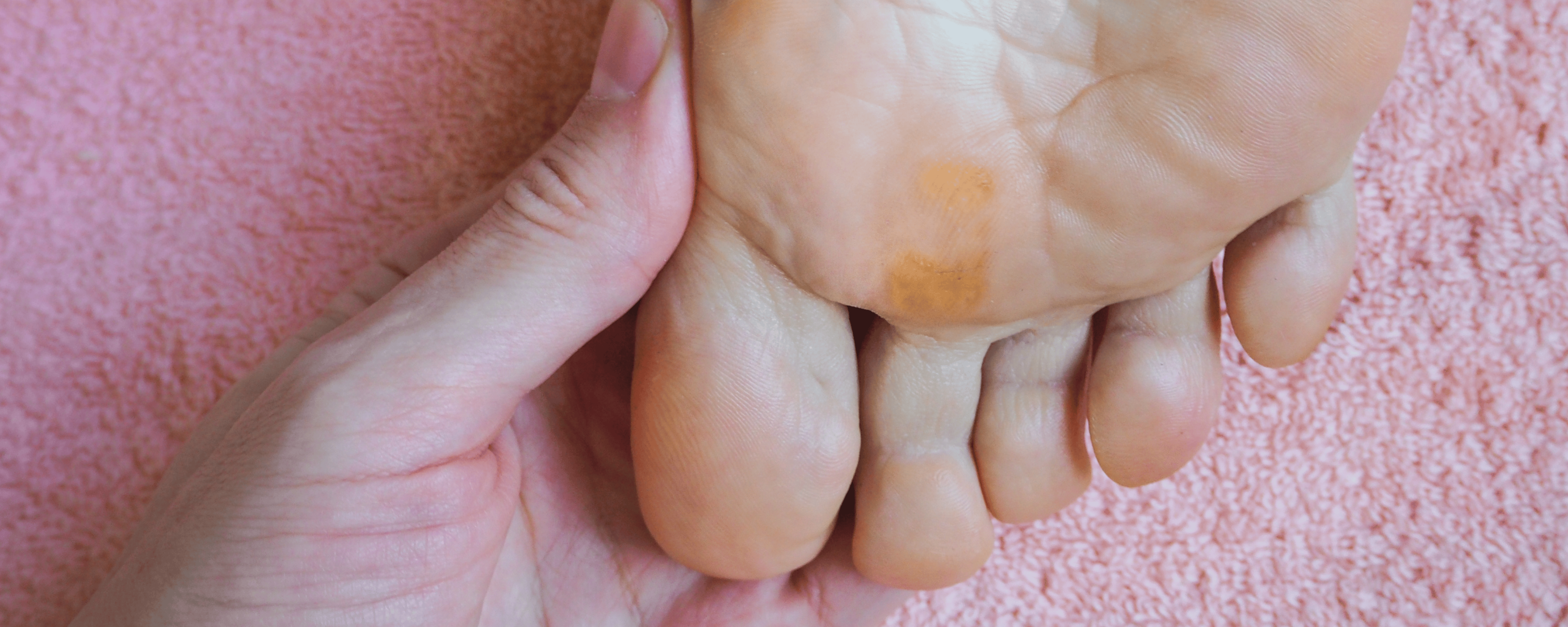
Professional Corn removal in Essex
At Essex Footcare, corns are:
- Fully assessed
- Accurately diagnosed
- Safely removed using sterile instrumentation
- In most cases, pain relief is immediate.
But we do not just remove the corn, we assess why it developed.
Will my Corn come back?
It can, if the pressure or friction continues.
That’s why we often review:
- Footwear
- Walking mechanics
- Areas of high pressure
- Foot posture
- If corns are recurrent, further assessment of biomechanics may be recommended.
In some cases, we may provide:
- Pressure-offloading padding
- Custom-made props
- Footwear guidance
- Specialist mechanical assessment
The goal is to reduce repeated stress and minimise recurrence.
When should you see a podiatrist for a Corn?
- You should book an appointment if:
- The corn is painful
- It keeps returning
- The skin becomes red or broken
- You have diabetes
- You are using repeated acid treatments without success
Early treatment is simpler, safer, and more comfortable.
Why choose Essex Footcare for Corn treatment?
✔ HCPC registered podiatrists
✔ Decades of clinical experience
✔ Safe sterile techniques
✔ Diabetic foot care expertise
✔ Local Essex clinics
✔ Clear diagnosis and honest advice
✔ No unnecessary treatments
We combine professional expertise with a calm, reassuring approach, so you feel confident you are in the right place.
If you have a painful corn and want safe, effective treatment, we are here to help.
Do not risk damaging your skin with acid treatments or self-cutting.
📍 Visit us at Essex Footcare, Professional assessment makes all the difference.
👉 Book your journey to recovery, call your nearest clinic in Billericay 01277 659200, Basildon 01268 553653, or Romford 01708 728498. Book your appointment today and walk comfortably again.
Especially in people on their feet all day
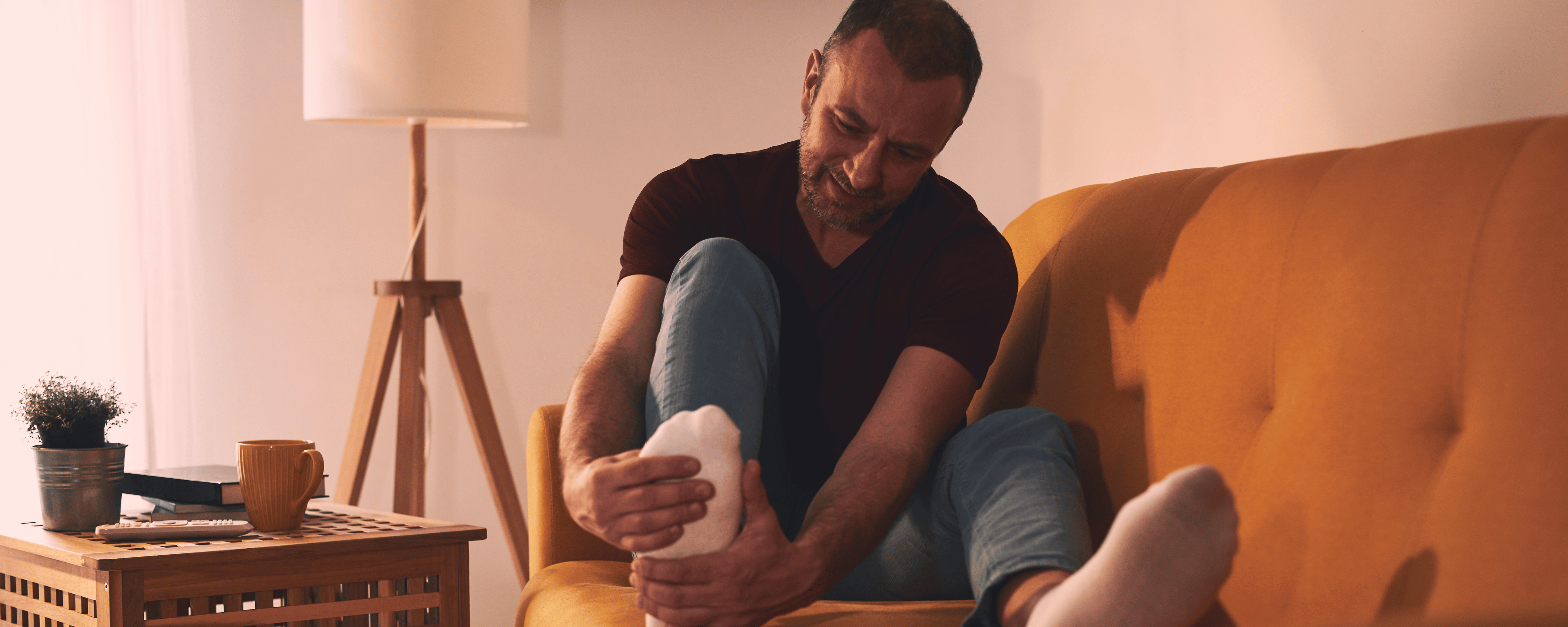
If you’re a nurse, teacher, shop assistant, or tradesperson who’s on your feet from morning to night, you’re not alone in feeling that deep, nagging heel pain by the end of the day.
At Essex Footcare, we see this kind of pain every single week in our Billericay, Basildon, and Romford clinics. It’s one of the most common reasons people come to see a podiatrist or chiropodist, and the good news is, with the right care, it can be treated and prevented.

👣 Why heel pain happens
Your heel takes on the full force of your body weight every step you take. Over time, standing or walking for long hours, especially on hard floors or in unsupportive shoes, puts strain on the plantar fascia, the strong band of tissue that supports your arch.
This can lead to tiny tears and inflammation known as plantar fasciitis, one of the most common causes of heel pain where pain is often worst first thing in the morning as you take the first few steps. It hurts!
But sometimes, the pain can also come from:
- A tight Achilles tendon pulling on the heel bone
- Poor footwear or arches that flatten too much
- Uneven posture or gait/ walking pattern that shifts pressure to the wrong places
- Or simply the effects of fatigue and overuse
Why certain jobs make it worse
Some professions make you more likely to suffer from heel pain because of the constant strain and lack of recovery time.
If you spend hours on your feet every day; teaching, nursing, working in retail, hairdressing, or construction, your feet rarely get the break they need. Hard floors, safety boots can make things even worse.
Your body adapts silently over time, until one day, the pain stops you in your tracks.
The problem with “Just coping”
Many of our patients tell us they’ve “just lived with it” for months or even years, trying different insoles, rolling their foot on a tennis ball, or taking painkillers.
But without understanding what’s really causing the problem, the pain often returns or even gets worse.
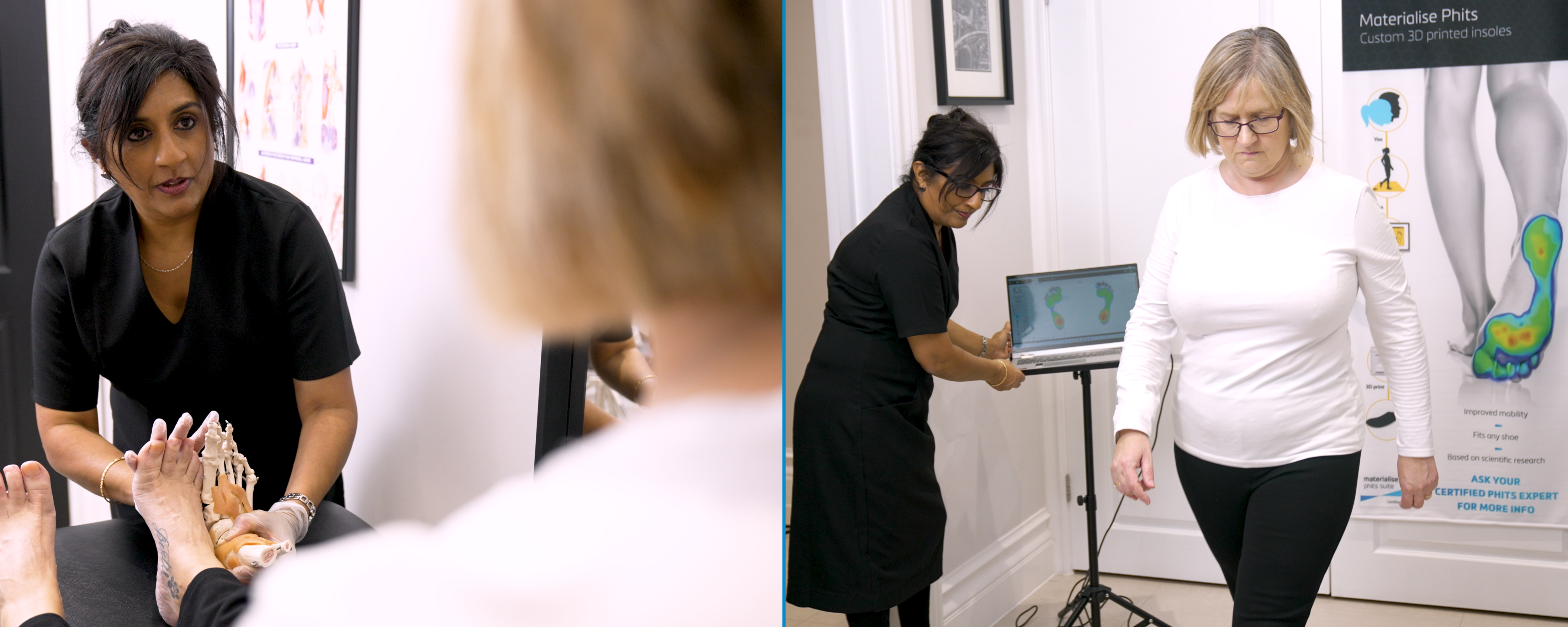
That’s why we take the time to look deeper. Our approach combines hands-on assessment with advanced gait and motion scanning to understand how your foot moves, balances, and carries your weight, right down to 0.1mm accuracy.
Some tips to help you:
If your heel pain feels sharp first thing in the morning or after sitting for a while, it could be plantar fasciitis, inflammation of the thick ligament that supports your arch.
Here are a few small things that can help ease discomfort at home:
👣 Support your feet: Wear shoes that are not sloppy or too big — even indoors. Walking barefoot on hard floors can make symptoms worse.
🧊 Reduce inflammation: Rolling your foot gently over a cold can or frozen water bottle for 5–10 minutes can calm irritation but this can only be a short-term fix to relieve symptoms over using ice can actually limit the healing process.
🧘♀️ Do not carry out deep stretching without guidance however gentle stretches can ease tightness. Try light calf and foot stretches morning and evening — this keeps the ligament flexible and reduces tension.
These steps can bring short-term comfort, but they don’t solve the underlying cause. Everyone’s feet, posture and gait are unique, which means the reasons for heel pain often are too.
At Essex Footcare, we look beyond symptoms to understand why your plantar fascia is under strain. Through gait scanning, footwear assessment, and custom Phits orthoses, we design a plan that’s as individual as your footprint, helping you heal properly, not just temporarily.
A clear plan, not just a quick fix
Once we understand what’s happening, we’ll create a custom plan to relieve pain and stop it coming back.
That may include:
- Gait analysis and posture assessment
- Footwear review and advice
- A tailored home rehab programme
- Custom 3D-printed Phits orthotics – the same technology trusted by Sir Mo Farah and other elite athletes
- And if needed, shockwave therapy to help chronic heel pain heal faster
We know there’s no magic wand, but with the right plan, we help people get back to walking, working, and living comfortably again.
💙 Why choose Essex Footcare?
With over 35 years of experience, our team has cared for thousands of people with heel and foot pain.
We’re not just about feet, we’re about helping you move freely, stay active, and enjoy life again.
At our friendly clinics in Billericay, Basildon, and Romford, you’ll find the right mix of technology, experience, and genuine care.
🌿 Ready to take the first step?
If heel pain is stopping you from doing what you love, let’s find out what’s really going on and start your recovery today.
📍 Visit us at Essex Footcare
👉 Book your journey to recovery, call your nearest clinic in Billericay 01277 659200, Basildon 01268 553653, or Romford 01708 728498
Is Foot Pain Stopping You in Your Tracks?
Foot pain can have a dramatic impact on your life, affecting everything from your daily work routine to your favourite activities. Whether you stand for long hours at work or enjoy walking and running as hobbies, persistent foot pain can transform these activities from enjoyable to agonising experiences.
Consider the complexity of your feet: each foot contains 26 bones, 33 joints, and over 100 ligaments, tendons, and muscles. With so many intricate components working together, there are countless potential causes of foot pain. This is why accurate diagnosis and personalised treatment are essential for effective relief.
What is Footscan Gait Analysis?
We've invested in cutting-edge gait and motion foot scanning technology to provide our patients with the most accurate assessment possible. Our high-tech Footscan system captures your unique postural and walking data in extraordinary detail, enabling us to deliver the best possible solution for your foot pain and get you back to doing all the things you love.
Footscan represents the gold standard in biomechanical assessment technology. This innovative system has been utilised in more than 3,000 scientific studies and is trusted by state-of-the-art movement laboratories, the British Armed Forces, and elite sports teams worldwide for over three decades. The combination of robust, clinically accepted hardware and software provides comprehensive analysis of gait, movement, pressure, and more.
How can Footscan help you?
Footscan Gait Analysis is particularly beneficial if you:
-
Struggle with heel pain, knee issues, or lower back discomfort
-
Feel unstable, off-balance, or tire quickly when walking
-
Are recovering from injury or planning to return to sport
-
Want to prevent issues before they develop
-
Are considering orthotics and want them tailored to your actual gait data
What to expect during your Footscan appointment
Your appointment begins with a comprehensive consultation where your podiatrist will:
-
Discuss your symptoms in detail to understand your specific concerns
-
Learn about your lifestyle, activity levels, and personal goals
-
Analyse your current footwear to identify potential contributing factors
-
Conduct a thorough assessment of your feet and lower limbs
The heart of your appointment involves our digital foot scanning technology:
-
You'll walk over our specialised pressure plate several times
-
The system captures detailed data about your foot mechanics and movement patterns
-
We analyse your unique foot scan data while you're both standing and walking.
-
Your results appear instantly on-screen for immediate review
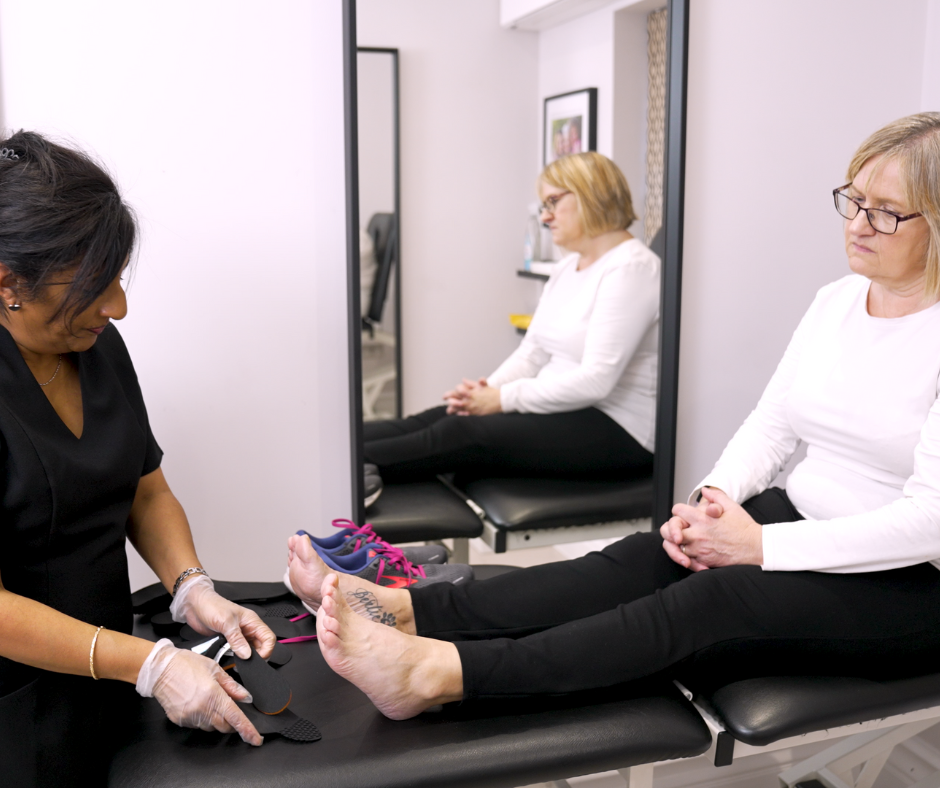
One of our skilled podiatrists will guide you through the findings, explaining what the data means and helping you understand the implications for your foot health. This detailed analysis forms the foundation of your personalised treatment plan.
Based on your scan results and consultation, you may be advised that you need custom orthotics or insoles. If required, we can design bespoke orthotics using dynamic, state-of-the-art 3D printing technology, creating the world's first high-tech 3D printed insoles specifically tailored to your feet.
Whether your treatment involves rehabilitation exercises, strength work, or custom orthotics, you'll leave with a comprehensive plan designed to address the root cause of your pain, not just the symptoms.
What to wear and bring to your Footscan appointment
To ensure we get the most accurate assessment possible, please come prepared with:
-
Comfortable pair of shorts (or bring them along if the weather is cold)
-
Clothing that allows easy access to your feet and lower legs
-
A range of your everyday and/or sporting footwear
-
Any existing insoles or orthoses you currently use
-
Reports from previous x-rays, scans, or imaging (if available, though not essential)
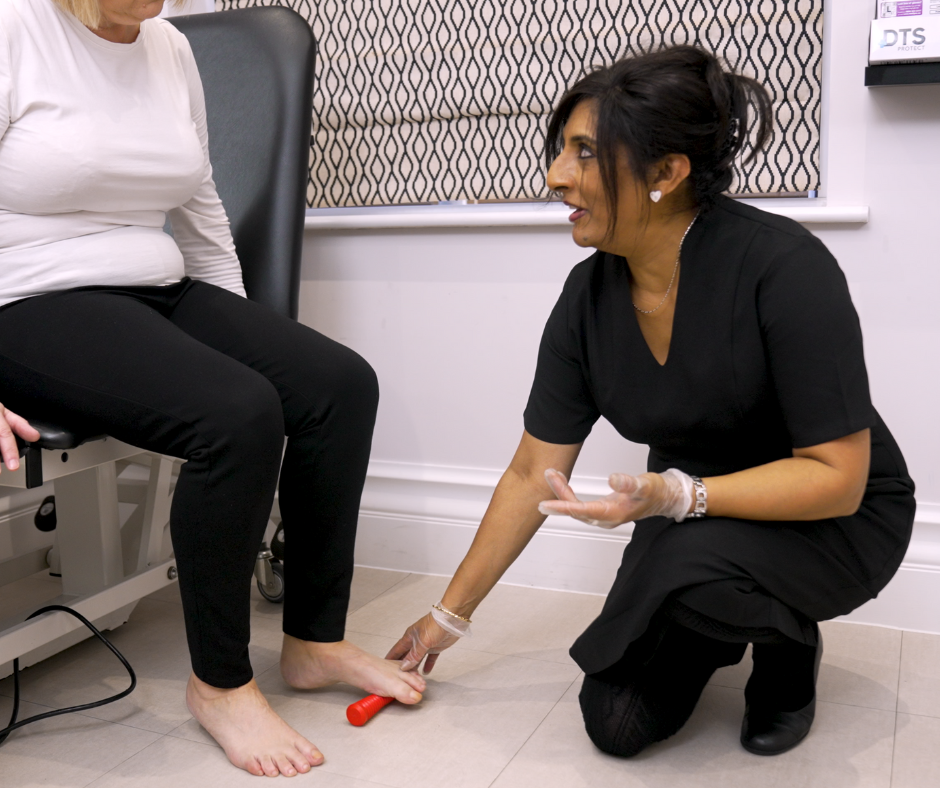
Our mission is simple: to relieve your pain and enable you to continue doing all the things you love. Whether that's walking your dog, training for a marathon, or playing with your grandchildren, our Footscan technology and expert analysis can help you return to an active, pain-free lifestyle.
Innovation, accuracy, and reliability are critical components of effective healthcare. With Footscan technology, you can trust that you're receiving the most advanced biomechanical assessment available, backed by decades of research and real-world application.
Don't let foot pain limit your life any longer. Contact us today to schedule your Footscan Gait Analysis appointment and take the first step toward lasting relief and improved mobility.
Tips For Beautiful Feet
Your feet are often the most neglected part of your body, yet they bear the brunt of daily activities and deserve just as much attention as your face or hands. Beautiful feet are not only aesthetically pleasing but also a sign of good health. Here are some tips to help you achieve and maintain beautiful, healthy feet.
1. Regular Cleansing
Keeping your feet clean is the first step to beautiful feet. Wash your feet daily with warm water and a mild soap. Pay special attention to the areas between your toes. After washing, make sure to dry your feet thoroughly to prevent fungal infections.
2. Exfoliation
Exfoliating your feet helps to remove dead skin cells and prevent the build-up of hard, rough patches. Use a pumice stone, foot scrub, or an exfoliating foot mask at least once a week. Focus on areas that tend to be rough, such as the heels and balls of your feet. If heel begin to crack they can become painful very quickly.
3. Moisturise Daily
Dry skin can make your feet look dull and unattractive. To keep them soft and smooth, moisturise your feet daily. Opt for a rich foot cream or lotion that contains ingredients like urea, shea butter, or glycerin. Apply the moisturiser after your evening shower or before bed for the best results.
4. Regular Trimming and Filing
Keep your toenails trimmed and filed to avoid ingrown nails and to maintain a neat appearance. Trim your nails straight across and use a nail file to smooth the edges. Be careful not to cut them too short, as this can lead to discomfort, infections and ingrown toe nails.
5. Cuticle Care
Just like the nails on your hands, the cuticles on your toes need care too. Gently push back your cuticles after a shower when they are soft. Avoid cutting them, as this can cause infections. Instead, use a cuticle remover or cream to keep them tidy.
6. Foot Soaks
Indulge your feet in a relaxing foot soak once a week. Soak your feet in warm water mixed with Epsom salt, essential oils, or a foot soak solution for about 15-20 minutes. This helps to soothe tired feet, soften the skin, and reduce swelling.
7. Wear Proper Footwear
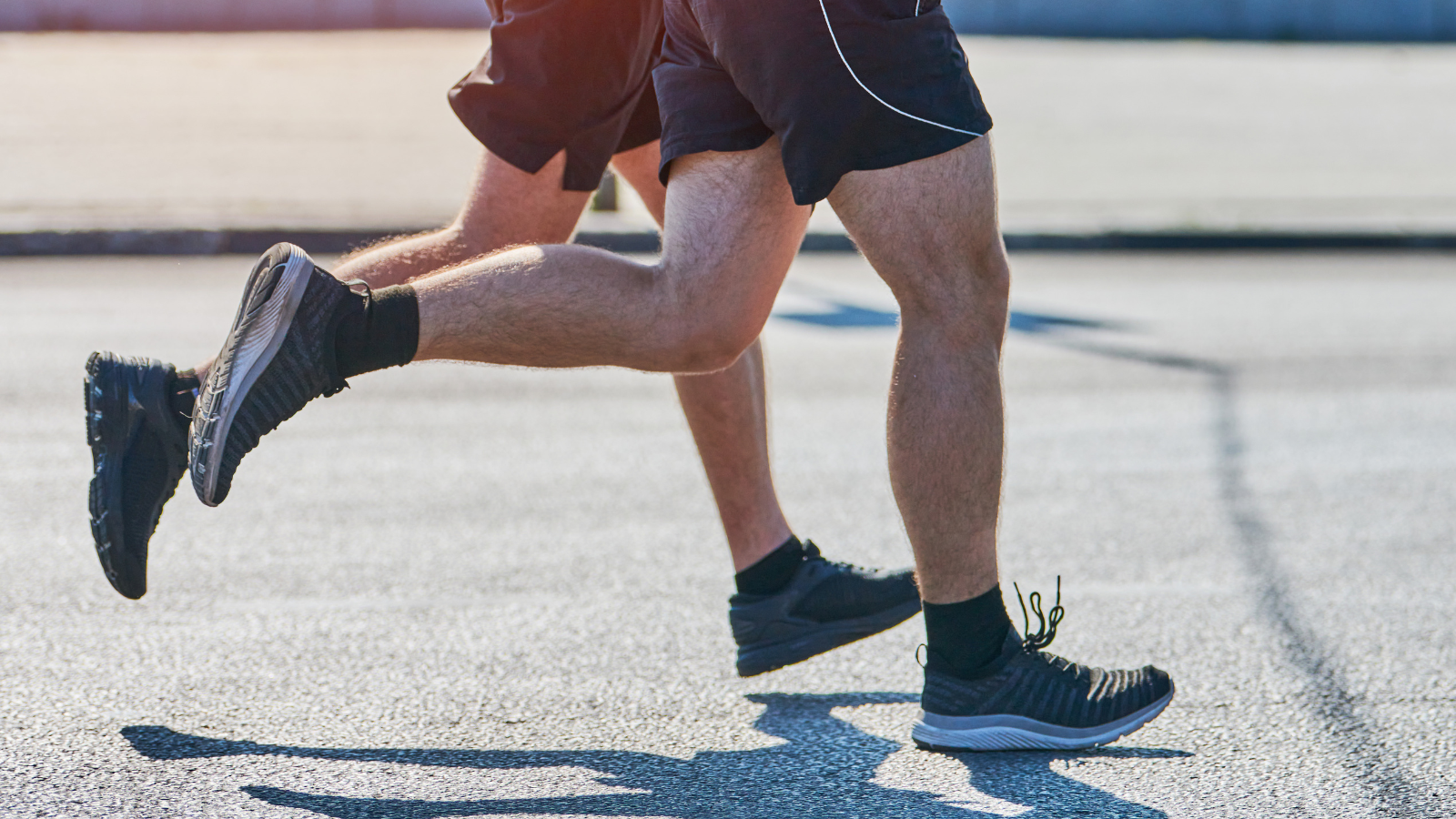
The right footwear is essential for maintaining beautiful feet. Wear shoes that fit well and provide adequate support. Avoid tight shoes that can cause blisters, calluses, and other foot problems. When at home, let your feet breathe by wearing open-toed slippers or going barefoot. Take a read of our advice on different types of shoes.
8. Use Sunscreen
Your feet are exposed to the sun just like any other part of your body, and they can get sunburned too. When you’re out and about in open footwear, make sure to apply sunscreen to your feet to protect them from harmful UV rays.
9. Stay Hydrated
Hydration is key to maintaining healthy skin, including the skin on your feet. Drink plenty of water throughout the day to keep your skin hydrated from the inside out. This helps to prevent dryness and promotes overall skin health.
10. Treat Problems Promptly
If you notice any foot problems, such as fungal infections, warts, or persistent dryness and cracking, address them promptly. Over-the-counter treatments are available for many common foot issues, but don’t hesitate to consult a podiatrist if the problem persists or worsens.
11. Pamper with a Pedicure
Regular pedicures can keep your feet looking their best. Whether you do it yourself or visit a salon, a pedicure helps to maintain nail health, exfoliate dead skin, and keep your feet moisturised. Make sure to follow good hygiene practices to avoid infections.
12. Foot Exercises
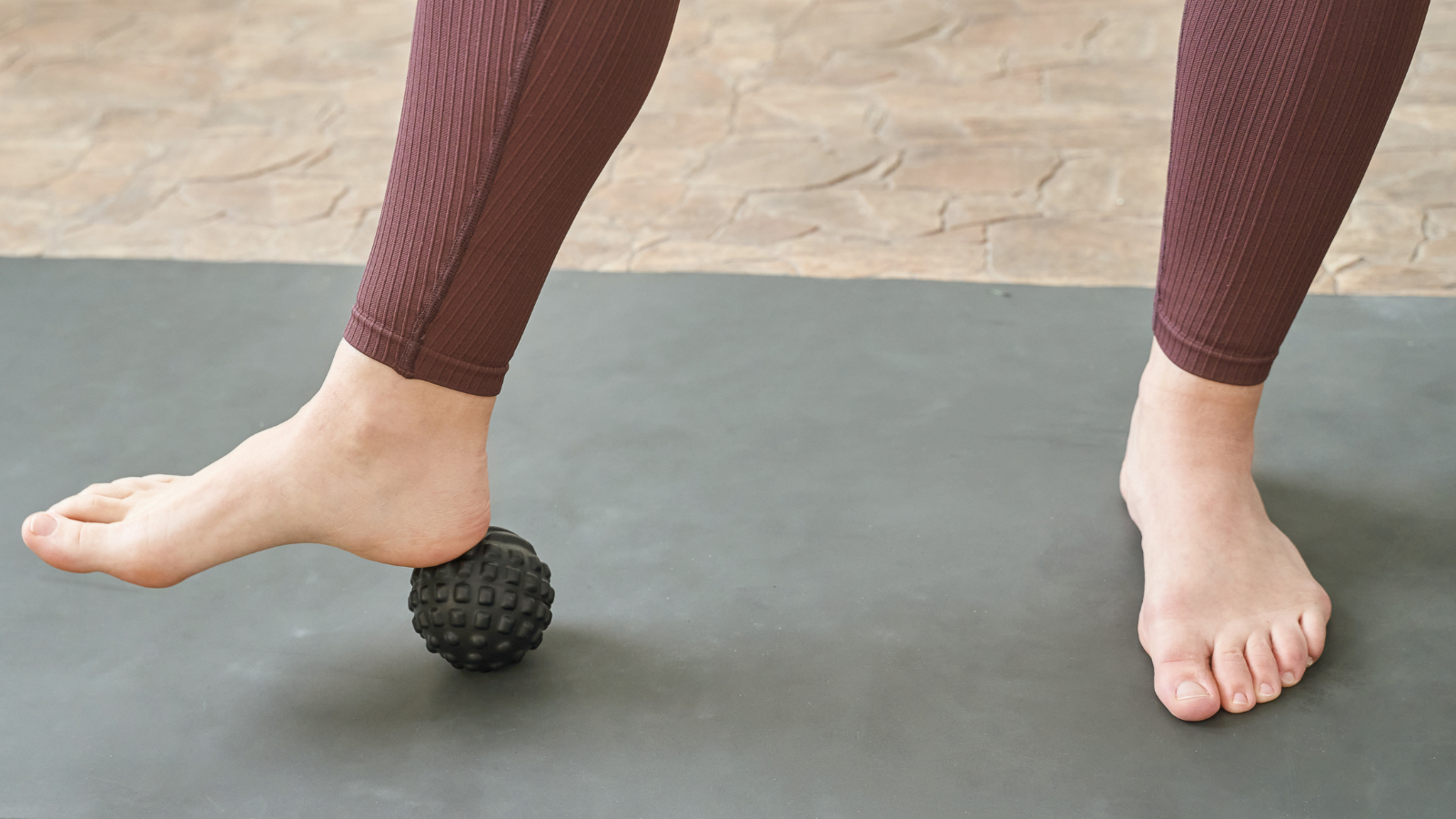
Keep your feet strong and flexible by incorporating foot exercises into your routine. Simple exercises like toe curls, arch lifts, and ankle rotations can improve circulation and prevent foot fatigue. Stretching your feet and toes regularly can also help maintain their flexibility.
Beautiful feet require consistent care and attention. By incorporating these tips into your daily and weekly routines, you can keep your feet looking and feeling their best. Remember, healthy feet are the foundation of your overall well-being, so treat them with the care they deserve. Your feet will thank you!
Book your appointment with us to keep your feel healthy and beautiful.
Have you ever felt overwhelmed by the multitude of shoe options out there?
From the office to the gym, and even cosy nights at home, finding the perfect pair can be daunting.
Fear not!
We've curated a comprehensive guide, drawing insights from Essex Foot Care's three clinics, to help you make informed decisions for happy, healthy feet.
Types of Shoes
Walking Shoes
For those who enjoy brisk walks or have an active lifestyle, investing in proper walking shoes is crucial. We suggest:
- Arch Support: Look for shoes that provide adequate arch support to prevent discomfort and overpronation.
- Cushioning: Opt for shoes with ample cushioning to absorb shock and reduce impact on your joints, especially during long walks.
- Breathable Materials: Shoes made of breathable materials help keep your feet cool and dry, preventing potential issues like blisters.
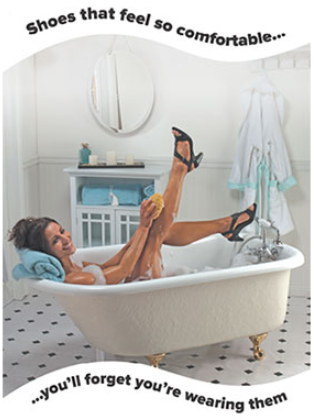
High Heels
While high heels can elevate any outfit, they may not always be kind to your feet.
We would encourage you to think about:
Heel Height: Consider opting for lower heels to minimize strain on the balls of your feet and lower back.
Platform Soles: Shoes with platform soles can provide some elevation without increasing the height of the heel.
Cushioned Insoles: Look for heels with cushioned insoles to add comfort and reduce pressure on the soles of your feet.
Children's Shoes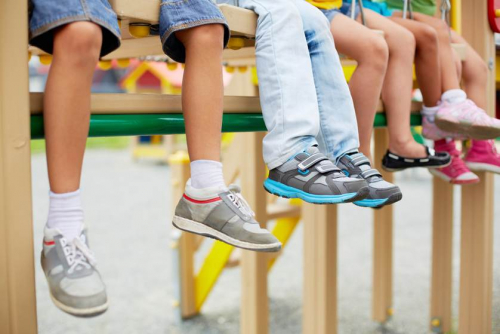
Properly fitting shoes are vital for children's growing feet. Essex Foot Care recommends:
-
Room to Grow: Ensure there's ample room (about a thumb's width) between the longest toe and the end of the shoe to accommodate growth.
-
Flexible Soles: Children's shoes with flexible soles allow natural foot movement, aiding in proper development.
-
Breathable Materials: Shoes made from breathable materials help prevent sweating and discomfort.
Slippers
Even your indoor footwear matters for foot health. Think about:
-
Support: Look for slippers with arch support to provide stability and comfort, especially if you wear them for extended periods.
-
Non-Slip Soles: Slippers with non-slip soles reduce the risk of accidents, particularly on smooth surfaces.
-
Warmth and Comfort: Choose slippers made from materials like wool or fleece for warmth and cosiness during colder months.
-
Well-fitted: It’s important to consider that worn, loose slippers are a fall hazard and could cause trips or falls in the home
Photo from Widerfitshoes.co.uk
Choosing the Best Shoes
When it comes to selecting shoes for any occasion, we’d encourage you to consider the following factors:
-
Fit: Shoes should feel comfortable from the moment you try them on. If they feel too tight or too loose, they're likely not the right fit.
-
Purpose: Match the shoe to the activity. Athletic shoes are designed for sports, while dress shoes are ideal for formal events.
-
Quality: Investing in well-made shoes ensures durability and proper foot support, reducing the risk of foot problems.
Shoe Fitting Guide
Properly fitting shoes are essential to foot health. Essex Foot Care offers these fitting tips:
-
Measure Both Feet: Feet can vary in size, so measure both and go with the larger size.
-
Try Shoes Later in the Day: Feet tend to swell throughout the day, so try shoes on in the afternoon or evening for a more accurate fit.
-
Wiggle Room: There should be about a half-inch of space between the longest toe and the end of the shoe to prevent cramping.
-
Walk Around: Take a few steps in the shoes to ensure they don't slip or rub uncomfortably.
Remember, your shoes should look good and support your feet throughout the day. Whether exploring Essex or enjoying a quiet night in, the right shoes can make all the difference.
Our experts are happy to advise what you must look out for when investing in footwear. We are here to help and encourage you to find the perfect fit for your lifestyle and foot health needs. Get in touch if you have any questions.
Latest Tips
- When your feet need more than just a good shoe
- Cracked heels? Get your feet summer-ready!
- Fungal Nail Infection – caught early and managed with combined care
- Corn removal in Essex. Safe, effective treatment for painful corns
- Why Heel Pain Is So Common
- At FootScan appointment at Essex Footcare
- The Complete Guide to Footwear: Choosing the Right Shoes for Every Occasion
- How is Your Socks Life?
- What is Swift Microwave Therapy?
- Is your ingrown nail a right pain the foot ?
What People Say
-
Foot Pain
.page-testimonial { padding: 10px; background: #019ddd; margin-bottom:10px; border-radius: 4px; } .page-testimonial img...
-
General
Absolutely brilliant service , very genital and professional, highly...